
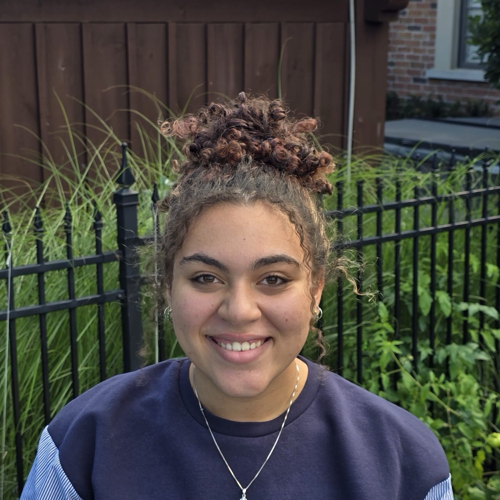
How Sophia Got Into Waterloo Engineering and UBC Architecture
Sophia entered Grade 12 convinced she would study civil engineering, but the application process revealed how much she loved both physics and art. With a system for deadlines, essays, and interviews, she earned seven acceptances, including Waterloo Engineering and UBC Architecture, then chose the program that felt like her.
Jump to
The first acceptance arrived in February. I opened the message and learned that I had been accepted to Waterloo for civil engineering, one of the programs I had spent months telling myself would be almost impossible to reach.
Instead of making the decision for me, that acceptance raised a bigger question. Getting into a program and choosing the right future were not the same thing.
A year earlier, I had been almost completely convinced I would become a civil engineer. I love physics. I love understanding how things work and thinking about how structures are built. Engineering seemed to fit that part of me, and it also fit the kind of path I thought my family expected me to choose.
What I had not understood yet was how much I loved art too.
Starting Grade 12 Without a Map
I joined AdmissionPrep in the summer before Grade 12. My mom had arranged the first meeting, and I went into it knowing I needed help even if I could not explain exactly what kind.
As the oldest child in my family, I did not have a sibling who had recently gone through Canadian university applications. My mom had attended the University of Toronto, but the process had changed. Every program had different deadlines, essays, interviews, and requirements.
My biggest fear was that I would put everything off until the pressure became unbearable. When I worked alone, I could set a deadline and quietly decide it did not count. I was afraid I would miss a real deadline or rush work that did not reflect what I could do.
Writing made that fear worse. I have never loved essay assignments, and applications asked me to talk about my accomplishments as if I were selling myself. I had worked hard, but saying it aloud felt like bragging.
Building One Story Base
My advisor, Catherine, helped me stop treating every application like a completely new problem. We sat down and built one master list of my experiences, what I had learned from each one, and the qualities each story could show.
That list became my story base. Instead of staring at a blank page for every essay, I could choose the experience that fit the question and reshape it for that school. Catherine also broke the work into smaller deadlines that were easier to digest. There was now a real person on the other side of each commitment, someone I trusted and wanted to show up for.
The work still belonged to me. I wrote the essays, prepared for the interviews, and made every final decision. But I was no longer trying to hold the entire process in my head at once.
My strongest stories were not activities I had collected for an application. They were things I tried because they interested me. I joined my school's music programs and robotics club. My physics class hosted a kindergarten robotics day where we built robots with younger students and introduced them to coding. I also earned my school's highest score on the Grade 9 Pascal Math Contest and later received a certificate of distinction in the Canadian Senior Mathematics Contest.
Those experiences made sense together because they were mine. They showed the same curiosity that made me want to understand a structure, build something, make art, or try a problem simply to see where it led.
The Applications That Changed My Plan
The engineering applications included video interviews where I had to work through a problem and explain my thinking. I enjoyed them. Then I started the architecture applications.
Architecture also asked me to solve problems and talk about structures, but it added a portfolio and a series of art challenges. I genuinely loved making them. The work did not feel forced. Somewhere inside those applications, I realized I was not only a physics nerd. I was an art nerd too, and architecture gave both sides of me room to exist.
That realization was exciting, but it was uncomfortable. I had devoted so much time to civil engineering that changing direction felt like admitting my first plan had been wrong. I also had to separate what I wanted from what I imagined other people wanted for me.
When I spoke with my parents, I learned that I had made their expectations much bigger in my head than they were. They supported me. I was the person beginning this education, and I had to choose a future I could be happy with.
Seven Acceptances and One Real Choice
By the end of the application cycle, I had received seven acceptances. Five were for engineering at Waterloo, the University of Toronto, McMaster, Guelph, and the University of Ottawa. Two were for architecture at UBC and Carleton.
I had maintained an average around 97 to 98 percent across my courses, but the result still felt unreal. I had heard so many stories about how difficult engineering admission could be. Now I was not wondering whether I would get in anywhere. I was choosing between several strong programs, including Waterloo Civil Engineering and UBC Architecture.
I chose UBC Architecture.
It was strange to turn down a program like Waterloo Engineering, but I was no longer choosing the name that might impress someone else most. I was choosing the work I had enjoyed enough to forget that it was part of an application. That feeling told me something no ranking could.
Learning to Carry the Good Stress Too
UBC's offer was conditional, and one of my classes was known for pulling marks down by the end of the semester. Seeing a line I could not cross made me more anxious than I expected.
Catherine reminded me that I had made it this far and could keep going. Her support showed me that strategy and mental health were not separate. Strong essays matter, but so does being in a state where you can do the work.
My dad gave me another piece of advice that stayed with me: just get it done. When I started telling myself an application might fail, he reminded me that trying was better than never submitting at all. I did not have to know how everything would turn out before I began. I only had to begin.
A Note to the Student Who Keeps Putting It Off
Just start. The longer you avoid an essay, an interview, or even the question of what you want, the larger it becomes in your mind. Sit down for five minutes and brainstorm. Once you are moving, it becomes easier to keep moving.
Try things because they sound interesting, not because you think they complete a perfect application profile. Join the music program. Build the robot. Enter the contest. Help a younger student learn something you enjoy. When application season arrives, you will not need to invent a person for the admissions committee. You will already have real stories that show who you are.
And give yourself permission to change your mind. The application process might reveal that the future you planned is not the one you want most. That is not failure. Sometimes clarity is the most important result the process can give you.
What Comes Next
This fall, I am moving across the country to begin architecture at UBC. I am excited about the curriculum, the tools I will learn to use, and the people I will meet. I am nervous too. I will be far from my family, and pretending that a major life change is not scary would not make me more prepared for it.
The nerves mean I care about what happens next.
A year ago, I thought success meant proving I could get into engineering. Getting into Waterloo showed me that I could. Getting into UBC Architecture helped me see what I actually wanted to do with that ability.
I started with too many deadlines, too many questions, and a future that felt fixed before I had explored it. I am leaving with seven acceptances, one clear choice, and a lesson I will carry into every project that comes next: start moving, stay curious, and choose the work that feels like your own.